Signs of a leak
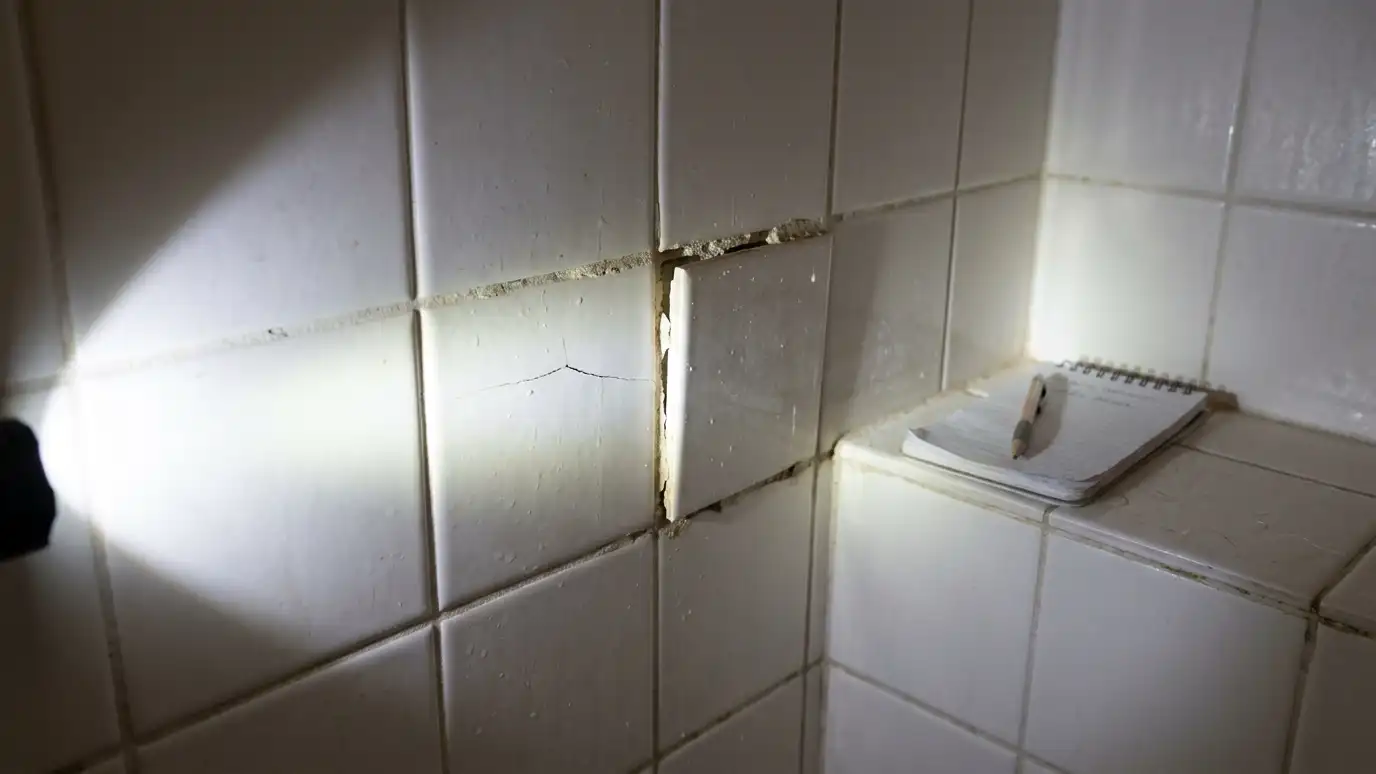
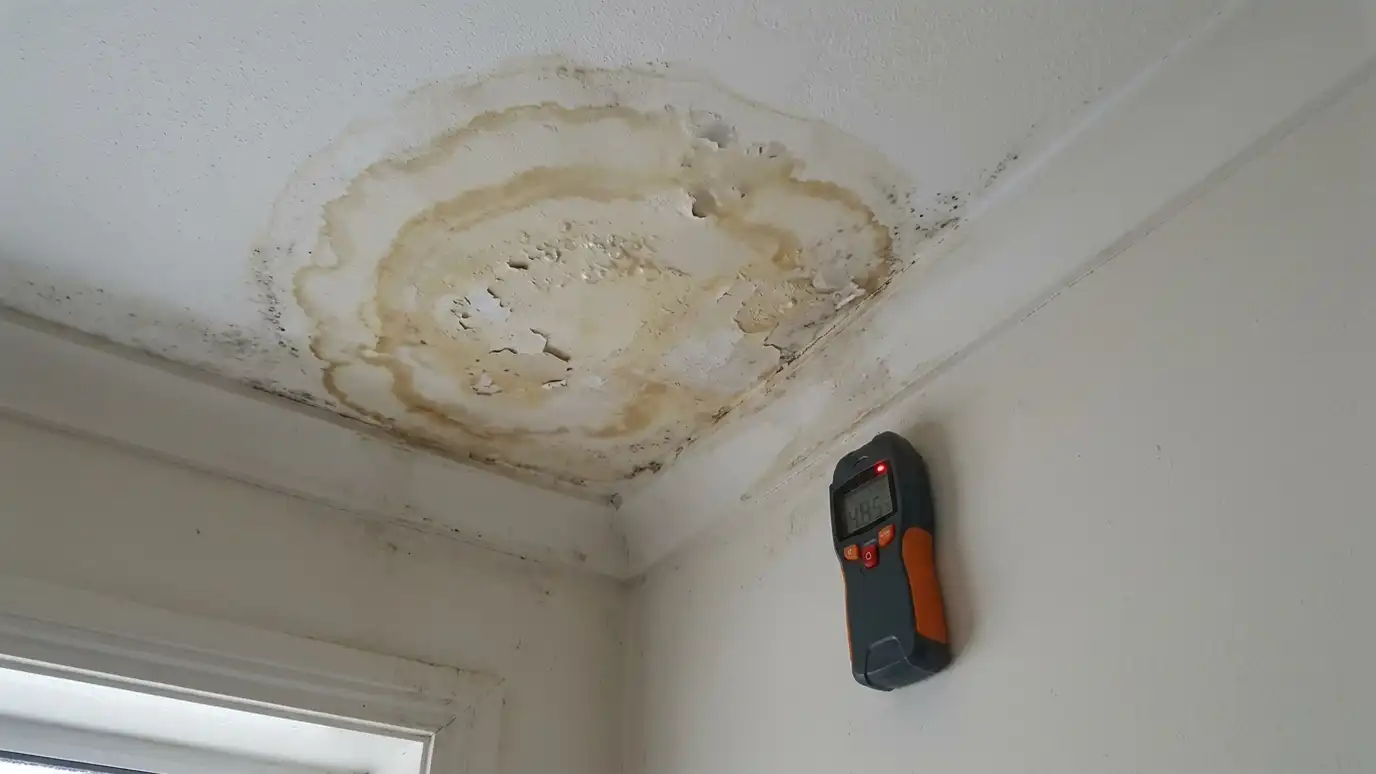
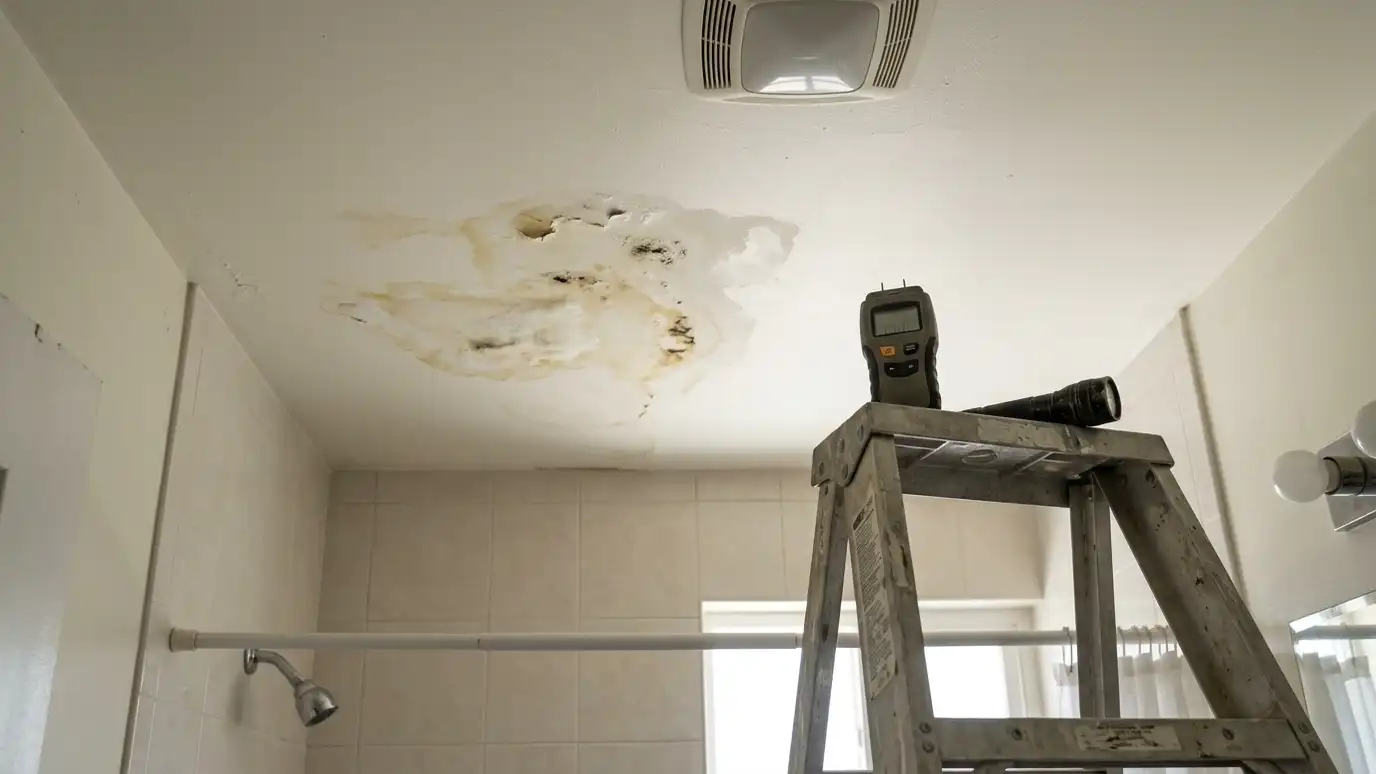
Stains on the ceiling below, a soft or spongy floor near the shower, a musty smell, peeling paint, loose or cracked tile and water at the base of walls are all warning signs. Sometimes the first sign is a higher water bill.
Take photos and note when you first saw the problem.
Stop using the shower if water is leaking into a ceiling or electrical fixtures.
Take photos with the date and a coin or ruler for scale. Photos help you and your contractor track whether a stain is growing.
Common sources
Leaks come from many places: cracked grout and tile, failed caulk, door seals, the drain connection, a cracked or failed pan, valve and trim leaks and supply pipes inside the wall.
Water often travels along framing before it shows up, so the damp spot may be far from the source.
That is why testing beats guessing.
If water drips from a ceiling light or fixture, turn off power to that circuit and keep away from it until it is checked.
How leaks are found
Contractors use moisture meters, water tests of the walls and door, flood tests of the pan and inspection of the valve and drain. Tests are done one at a time to isolate the source.
Small access holes are sometimes needed.
A written report explains what was found and what repair is needed.
Ask your contractor to explain each test and what it showed. A clear explanation means the diagnosis was careful.
Mildew and mold
Mildew on caulk and grout is common in humid bathrooms and is usually surface growth that can be cleaned and caulk replaced. Extensive or hidden growth, or growth after water damage, should be evaluated by a qualified mold specialist.
We do not perform mold remediation.
Fix moisture first, because cleaning alone does not solve the cause.
If you have had mold, ask the specialist for a written report. It helps your contractor plan the rebuild and gives you a record.
Repair or rebuild
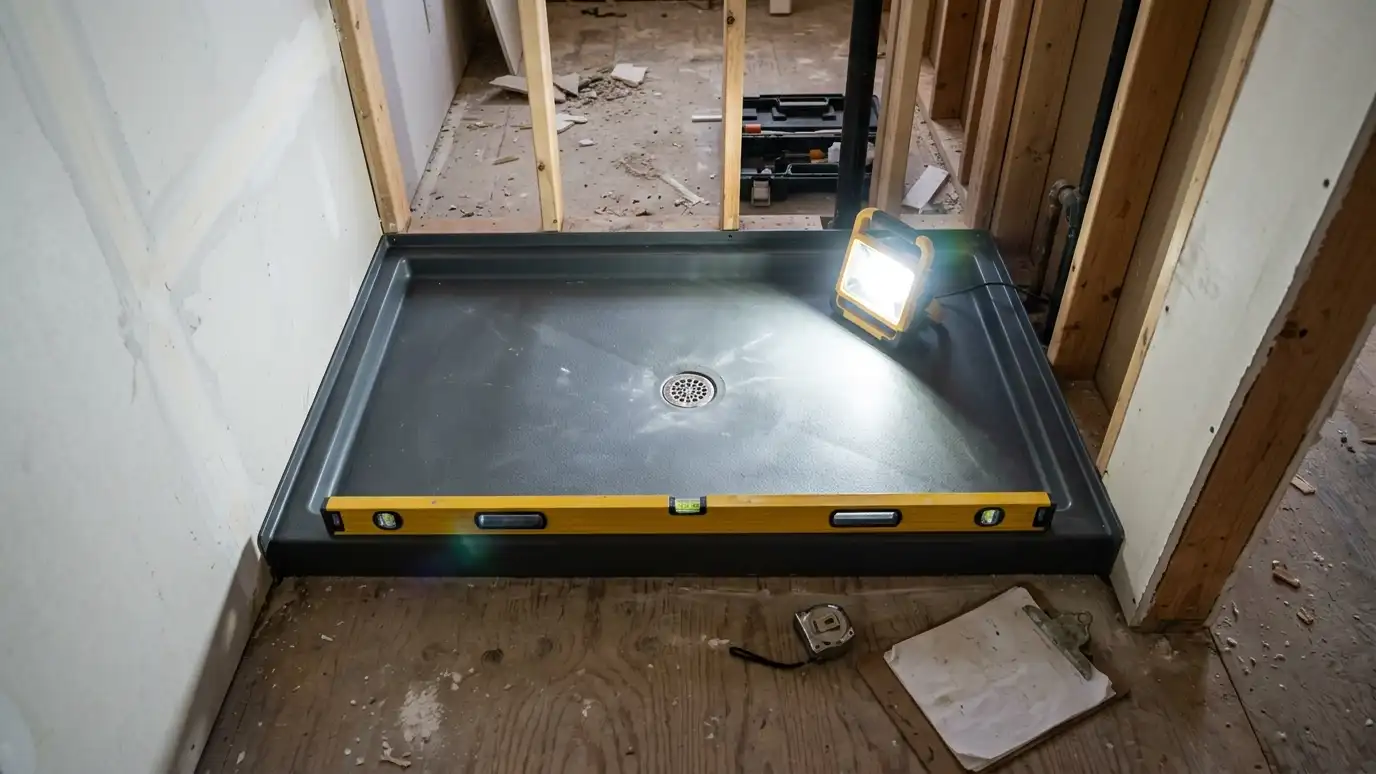
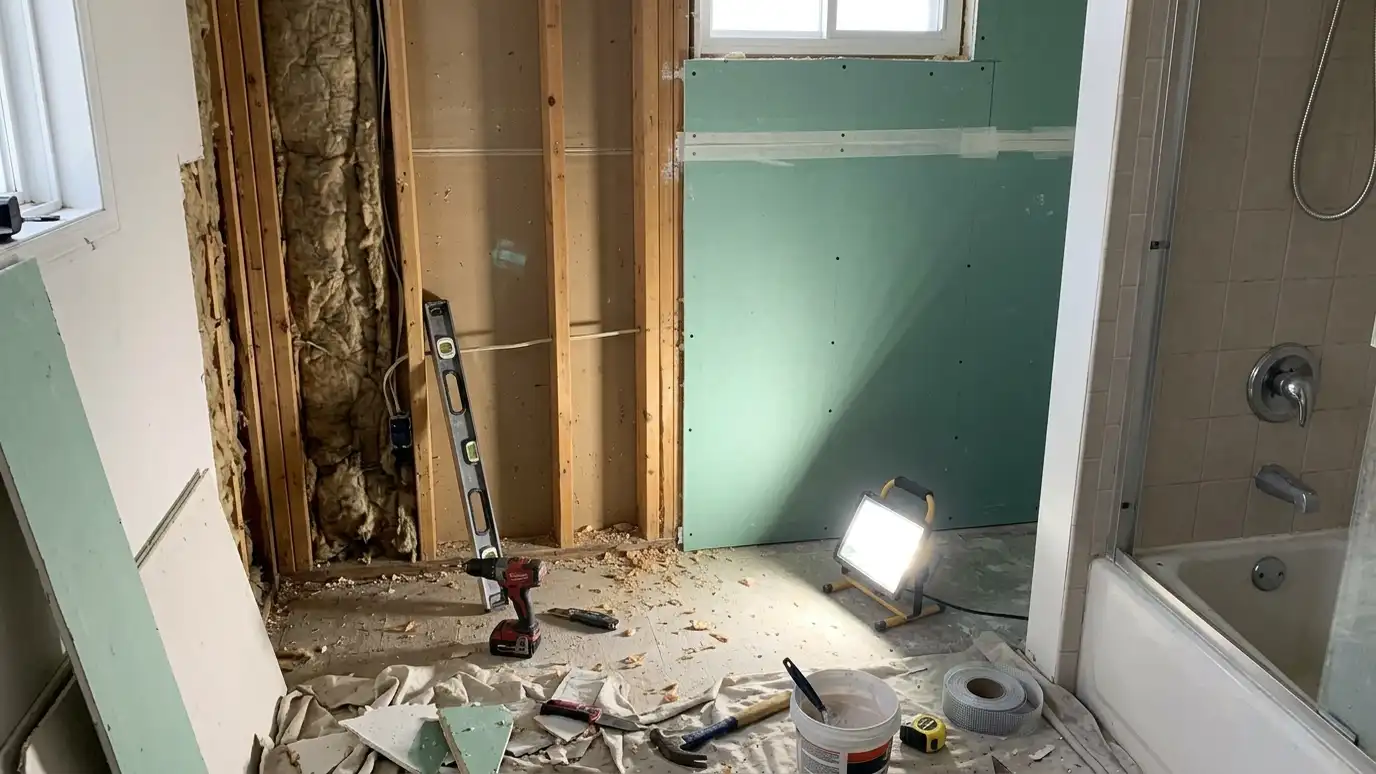
Small leaks at grout, caulk or a door seal may be repaired quickly. A failed pan, soaked backer board or rotted framing usually needs a rebuild of the affected area.
Patching a failing shower hides the problem and often costs more in the end.
We tell you honestly which situation you have.
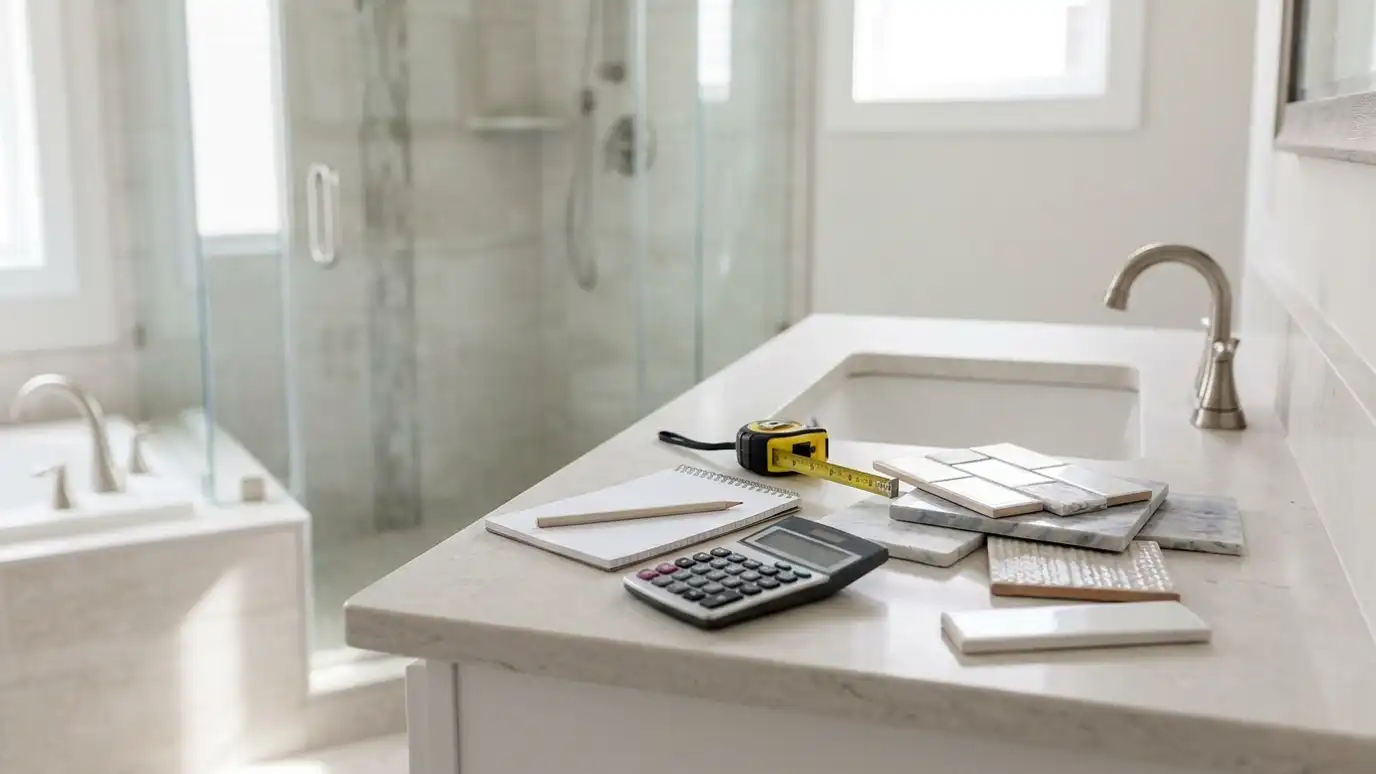
Ask for a written scope that separates the repair of the source from repairs of finishes. It makes comparing options much easier.
Prevention
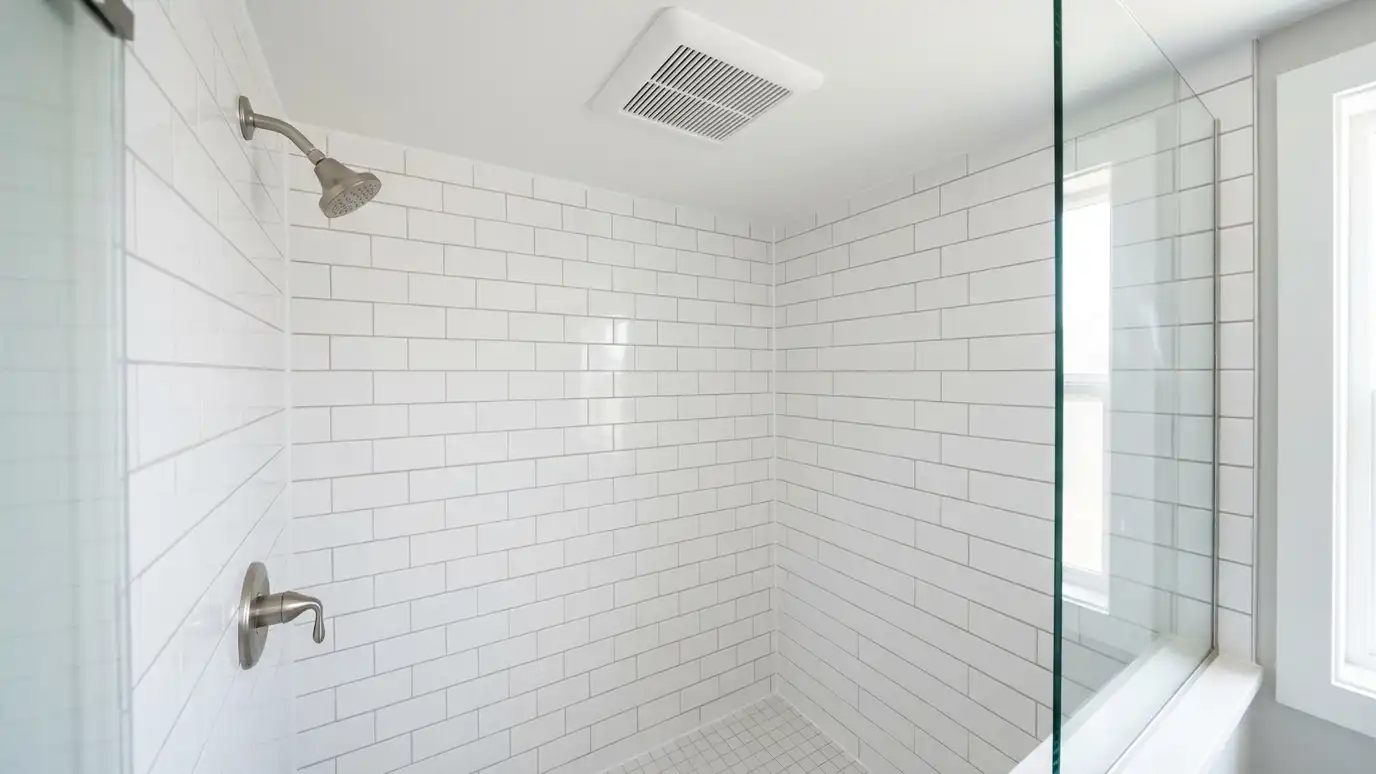
Good waterproofing, a flood-tested pan, flexible caulk at corners, a working exhaust fan and regular inspection prevent most leaks. Fix small problems promptly.
Replace caulk and grout when they fail, and clean drains.
A yearly check is a small investment compared with water damage.
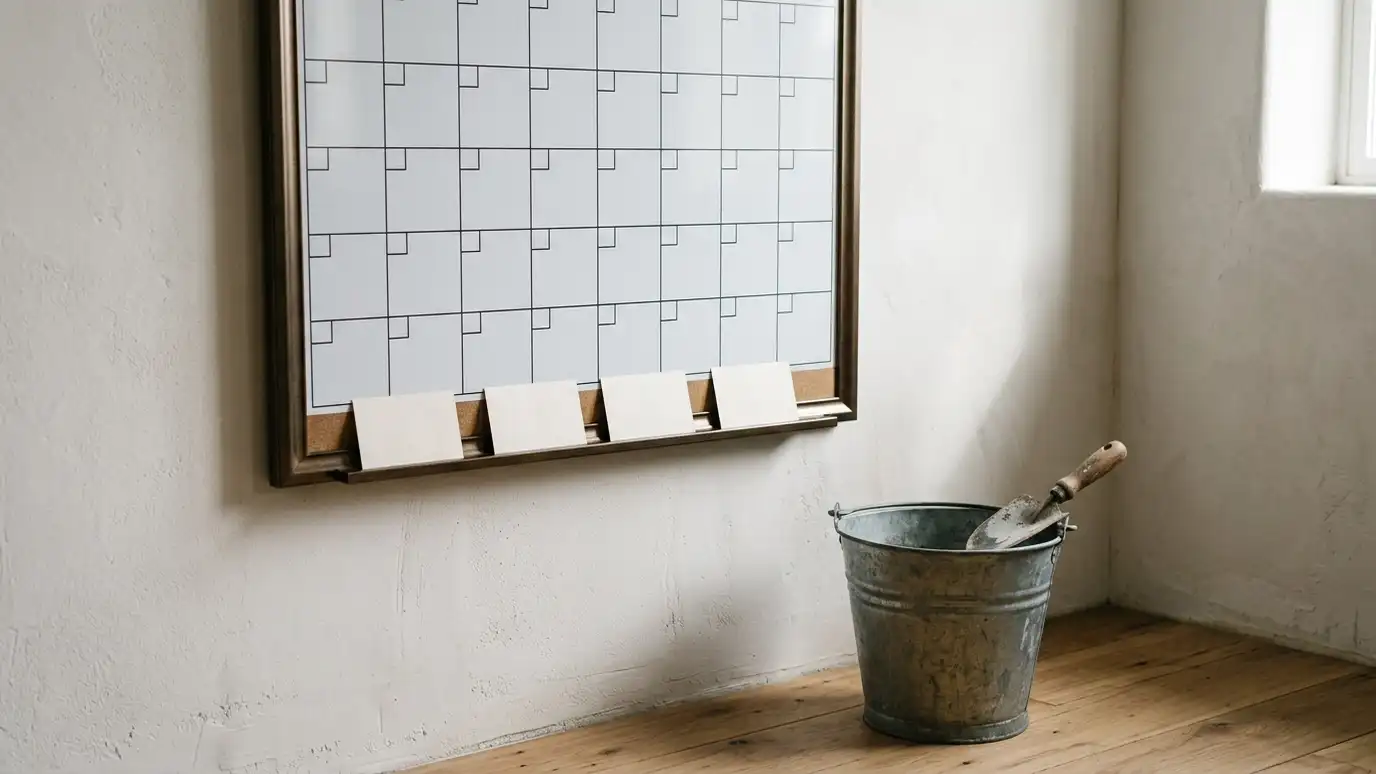
Mark your calendar for a yearly look at caulk, grout and the ceiling below the shower. A quick check catches problems early.
Find the source with tests, fix moisture first and rebuild when the structure has failed.