
Start with your goals
Write down what you want: a replacement of the same size, a tub-to-shower conversion, a custom tile shower, a new door or repairs. Note problems you already know about, such as leaks or a spongy floor.
A clear list helps every company give you a comparable estimate and shows you who asks good questions in return.
Photos of the shower and the bathroom are useful to share.
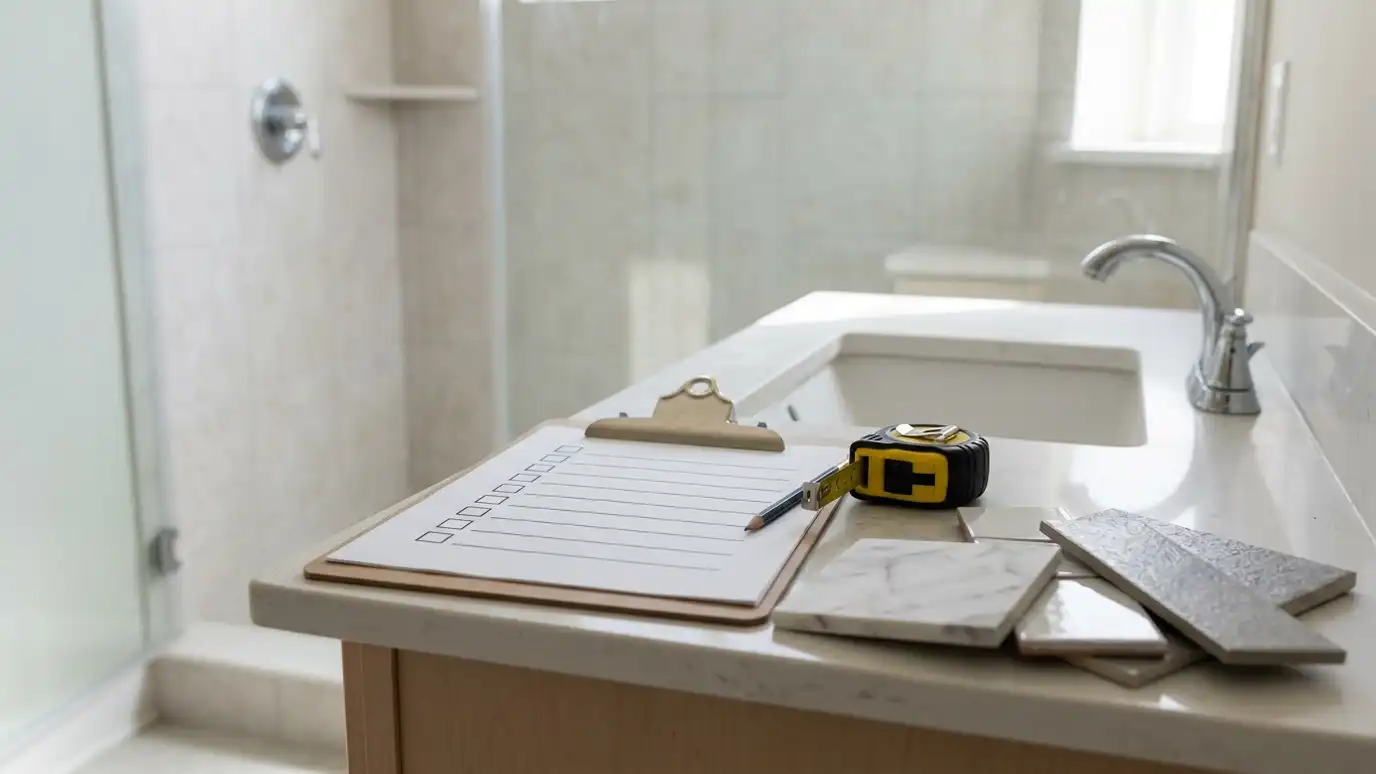
A written list of what you want done, even a rough one, makes it much easier to compare companies. It also helps you remember what to ask when the estimator is standing in your bathroom.
Ask about waterproofing
Waterproofing is the part of a shower you cannot see and the part most likely to fail. Ask what system the company uses, how seams and corners are treated, whether pans are flood-tested and whether they photograph the work before tile.
Be wary of any answer that boils down to paint-on sealer or that skips the membrane.
A confident, detailed answer is a good sign.
Questions about waterproofing are especially revealing. A contractor who talks about membranes, seams, corners and flood tests is thinking about how long your shower will last, not just how fast it goes in.
Check paperwork and references
Ask what paperwork and documentation the company can provide, and check what your local rules require for the work you are planning. Ask for a written estimate and agreement rather than relying on a handshake.
Ask for photos of finished showers and, if possible, speak with someone who had similar work done.
Look for a real business address, a phone that is answered and a website that matches what you see in person.
When you speak with references, ask about communication, tidiness, schedule and how problems were handled. A calm answer about a problem solved well is a good sign.
Compare estimates
Place estimates side by side and compare scope, materials, waterproofing, glass, fixtures, hidden-damage handling and schedule. A price that is much lower than others may leave out important steps.
A written estimate that explains the work in plain language is a good sign.
Do not choose on price alone. Consider communication, tidiness and how comfortable you feel with the people.
Put the key items in a simple table when you compare estimates: shower type, size, waterproofing, materials, glass, fixtures, hidden-damage handling and schedule. Differences become clear in a few minutes.
Red flags
Be cautious of anyone who pressures you to decide on the spot, asks for most of the payment upfront, will not put the scope in writing or cannot explain how they waterproof.
Unusually low estimates can signal skipped steps. Unusually vague estimates can signal surprises later.
Trust your instincts. If something feels off, ask more questions or move on.
Good companies are comfortable with questions and with giving you time to decide. If you feel rushed or confused, take that as a signal to slow down.
Before work begins
Confirm the start date, schedule, materials, fixtures and how changes will be handled. Agree on payment terms in writing.
Prepare the bathroom by clearing items and discuss access, parking, water shutoffs and where pets will stay.
Keep communication open and tell the crew about concerns early.
Write down the agreed products, dates, payment terms and contact person. Having these details in one place prevents misunderstandings and makes the project easier for everyone.
Hire the company that explains its waterproofing, puts the scope in writing and treats your home with care.